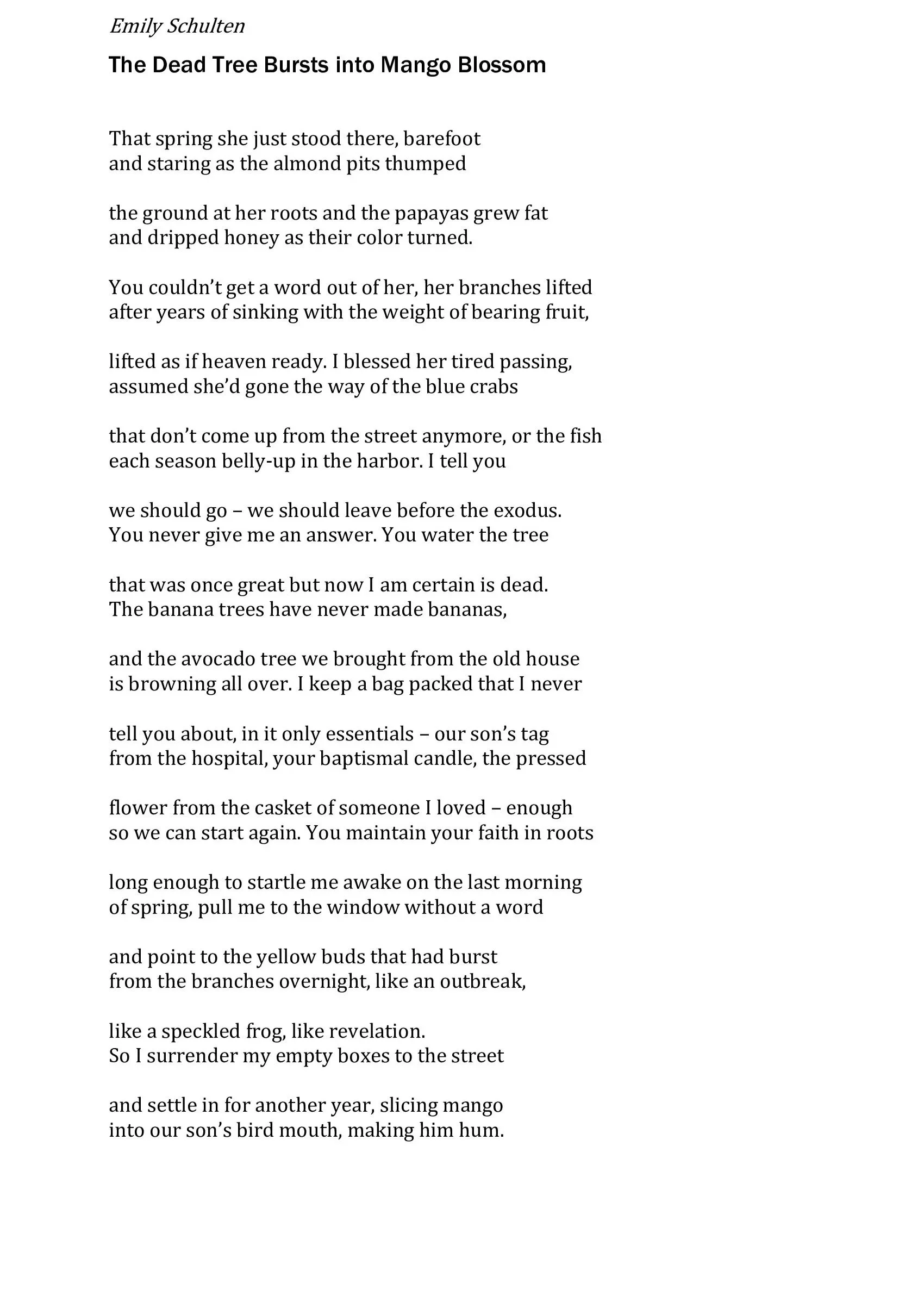
Our mango tree, which is actually the neighbor’s and only hangs quite a bit over our yard, my husband remembers from childhood. Maybe the second year we lived in our home, it didn’t fruit, and we worried it wouldn’t again. This poem is about this and the many things we are watching get lost to climate crisis shifts and a persistent feeling one has living on a remote island that it is time to move – a feeling both hard to shake and hard not to answer.
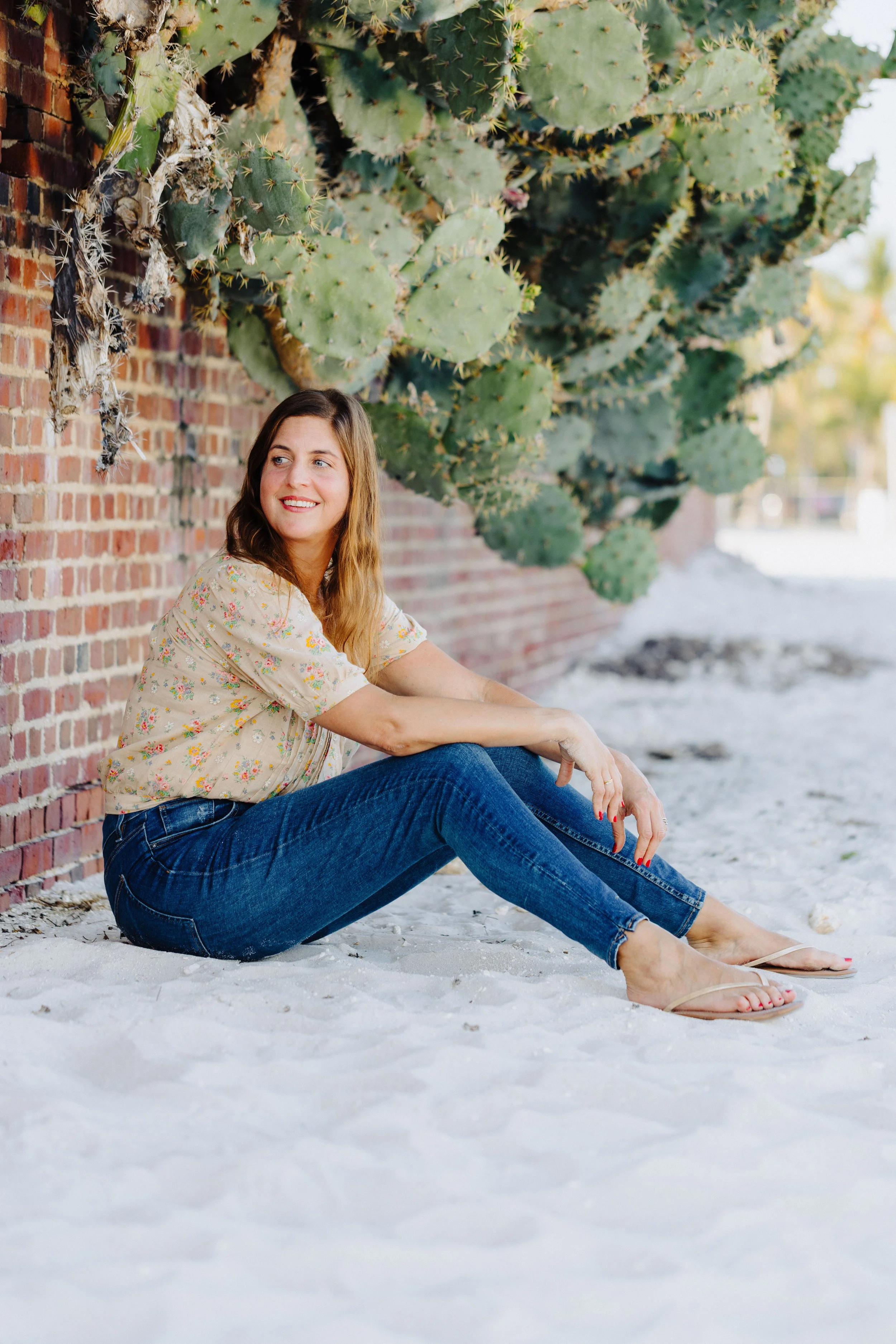
Emily Schulten is the author of three poetry collections, most recently Easy Victims to the Charitable Deceptions of Nostalgia, winner of the White Pines Press Poetry Prize. She is the recipient of the Academy of American Poets Laureate Fellowship and a U.S. Fulbright Scholarship, and her work appears in the Best American Poetry series, Ploughshares, The Kenyon Review, and Tin House, among others. She is a professor of English and creative writing and the director of CFK Poetics at The College of the Florida Keys.
Judge Alison Tanik’s Comments:
This poem, expertly written in couplets echoing the relationship at the heart of the narrative, is striking in its depth and simplicity. The writer leaves us asking so many questions, which is always a great thing for a poem to do. It seems that the couple have been displaced before ('the avocado tree we brought from the old house'), and also that they face the threat of displacement again ('the exodus', the packed bag). While one partner is alert to the environment changing around them (dead fish), the other partner maintains their 'faith in roots' - both physical and emotional, and does not want to move on. This subtly-written yet complex poem manages to portray place, history, hope, love, loyalty and fear in twenty-eight faultless lines. An absolute gem.
Quisque iaculis facilisis lacinia. Mauris euismod pellentesque tellus sit amet mollis.